
Engineering Validation
Test the Controller With the Motor — and the Motor in the Application
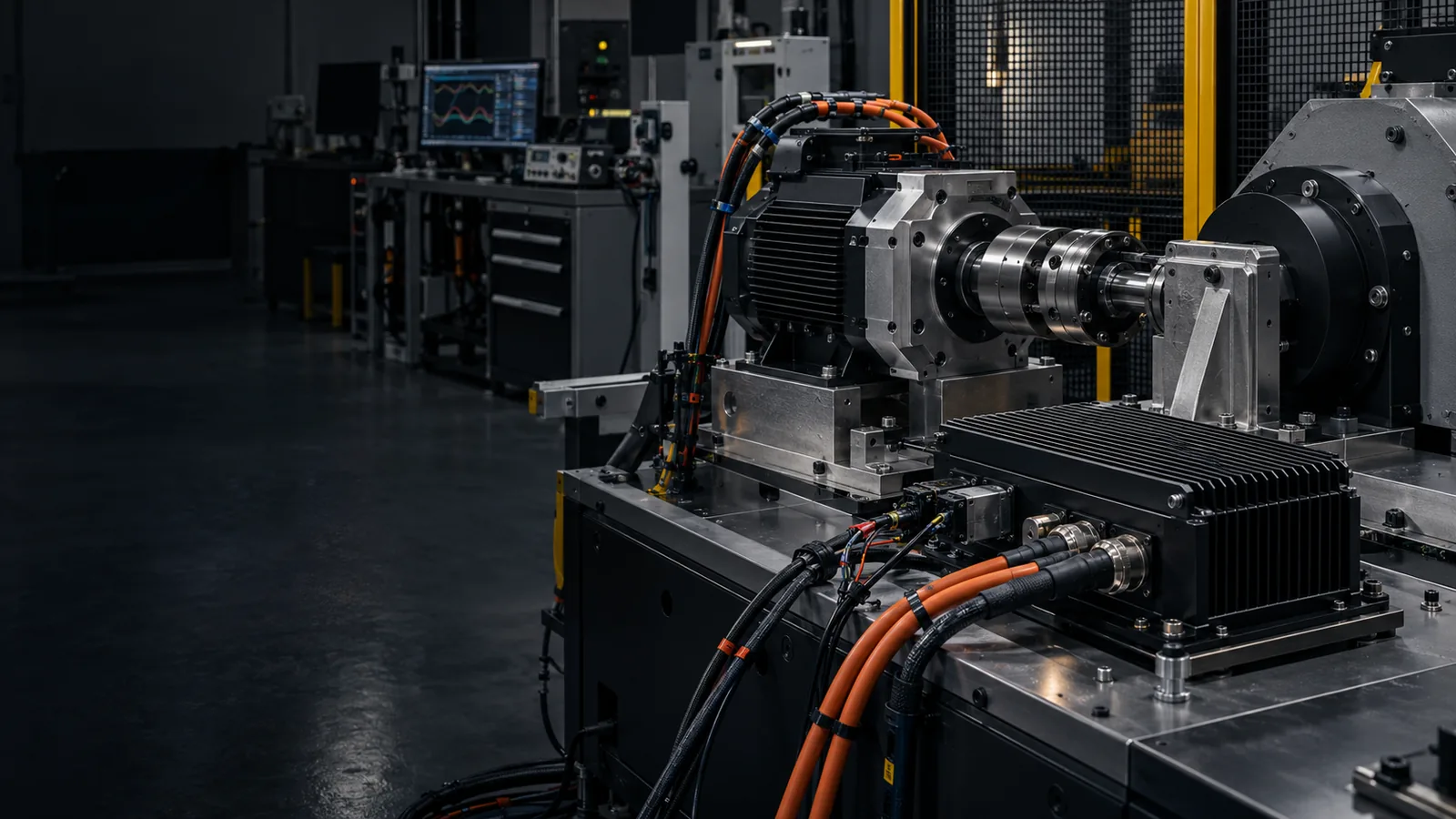
A BLDC controller should not be considered ready simply because the motor can rotate. It must also deliver the required startup behavior, speed regulation, load response and operating stability under the conditions expected in the final equipment.
Beyond Basic Function
A Working Controller Is Not Automatically a Validated Controller
A controller can power a motor successfully on a bench and still require optimization before it is suitable for production equipment. Performance testing helps verify behavior under the intended application conditions.
Startup Needs to Match the Load
Fans, blowers and pumps can create different startup conditions. The actual or representative load should be considered where possible.
Speed Must Be Stable
The motor may need to maintain stable operation at different speeds or under changing load conditions.
Load Changes Matter
Real equipment rarely operates under only one fixed condition.
Thermal Conditions Matter
Controller power, current, duty cycle and available cooling all influence thermal behavior.
Control Logic Must Work in Practice
The controller should respond correctly to equipment commands and operating states.
Production Requires Repeatability
Performance confirmed during engineering should be transferable into a production configuration.
Performance Parameters
Evaluate the Areas That Affect Real Motor Operation
The exact test scope depends on the controller platform, motor and application, but VIREOMOTOR can evaluate several important performance areas.
Startup Performance
Testing can review how the motor begins operating under the intended conditions and whether startup behavior is suitable for the application.
Speed Performance
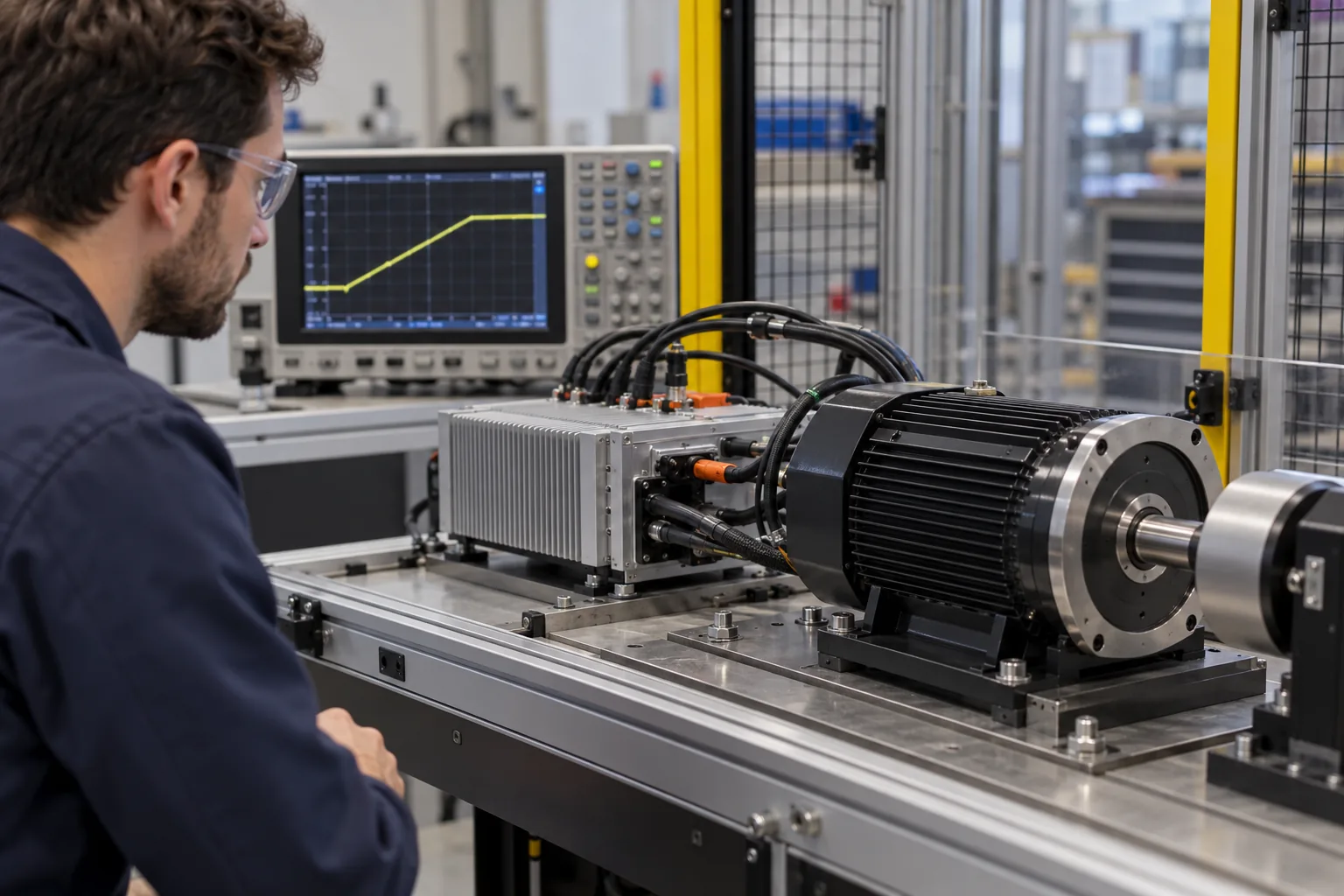
Evaluation can consider operation at rated speed, stability across the required range and response to changes in speed command.
Load Response
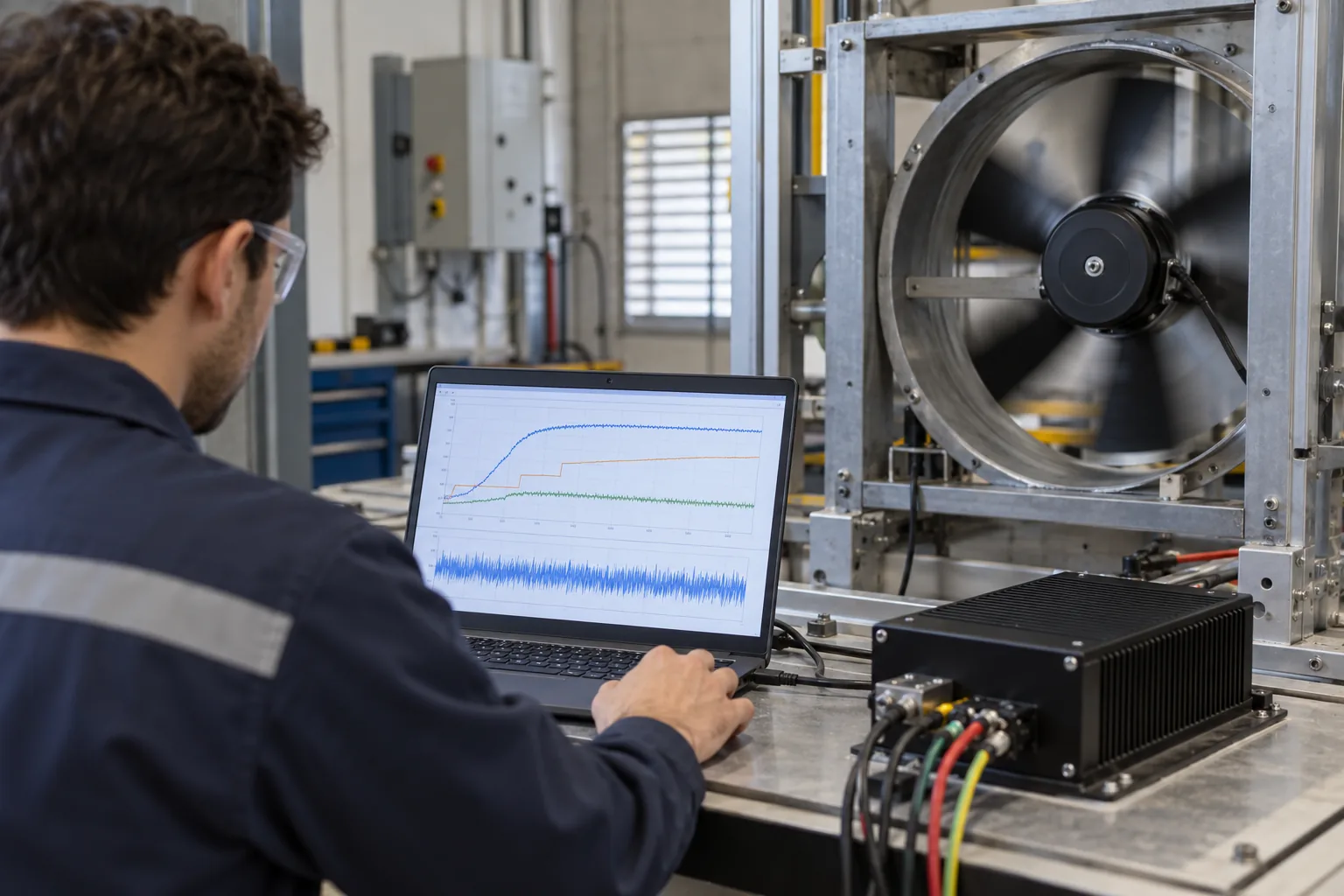
Testing can consider how the controller and motor respond to the actual fan, blower or pump load and to changing operating conditions.
Electrical Behavior
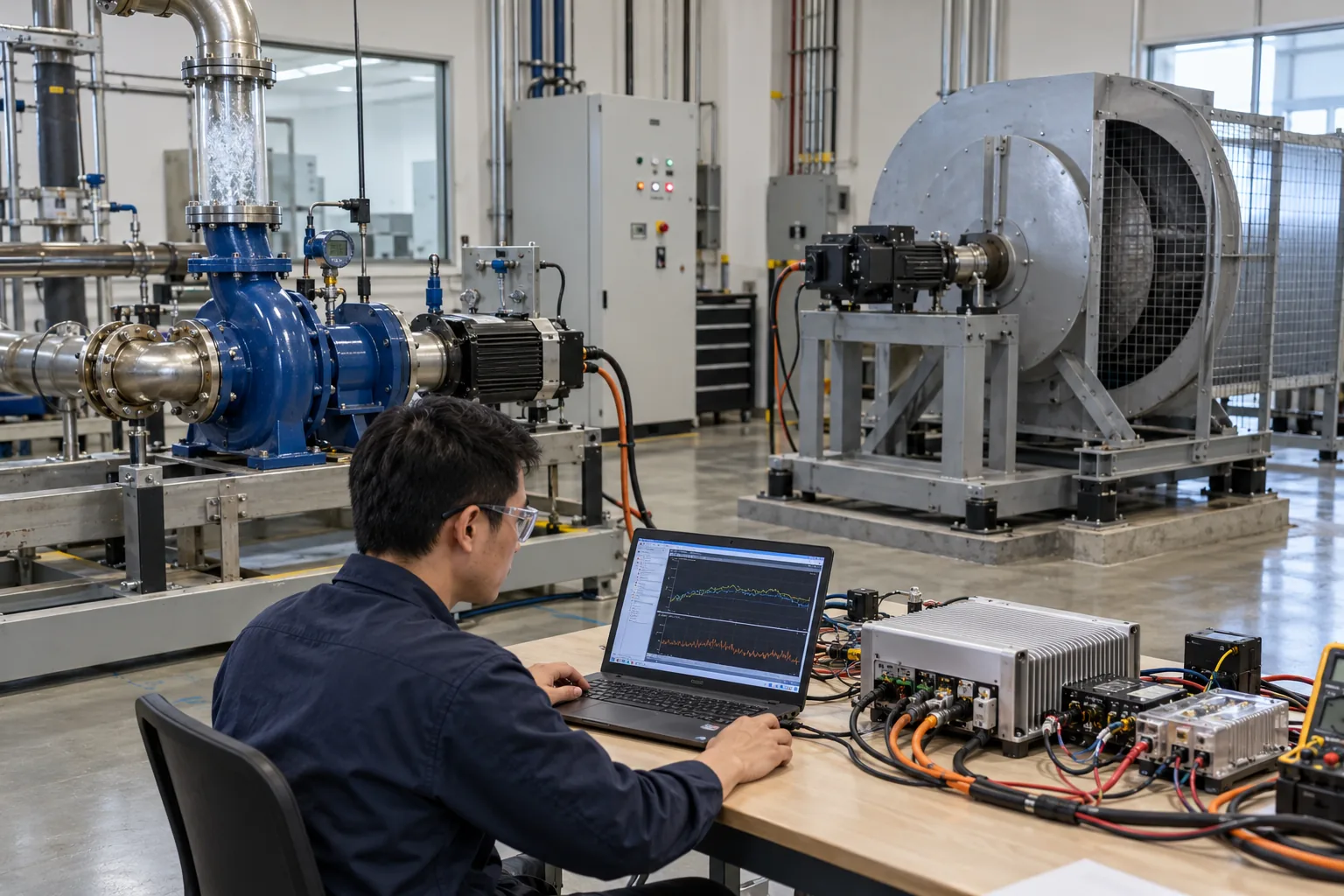
Controller operation can be reviewed against the confirmed electrical requirements defined for the actual project.
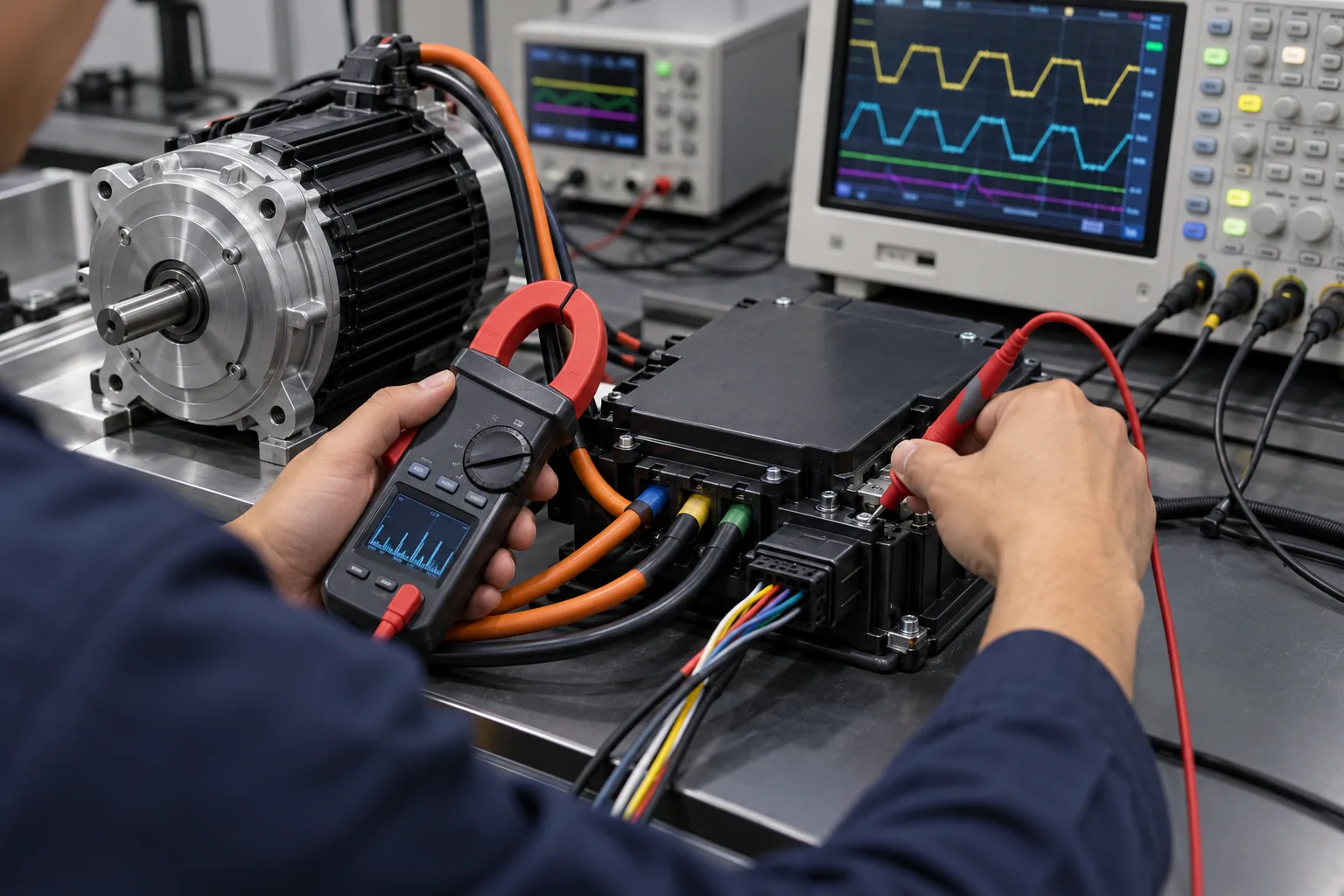
Thermal Behavior & Operating Stability
Thermal evaluation can consider operating duration, installation conditions and available cooling. Longer operating periods can also help review stability under the intended duty cycle.
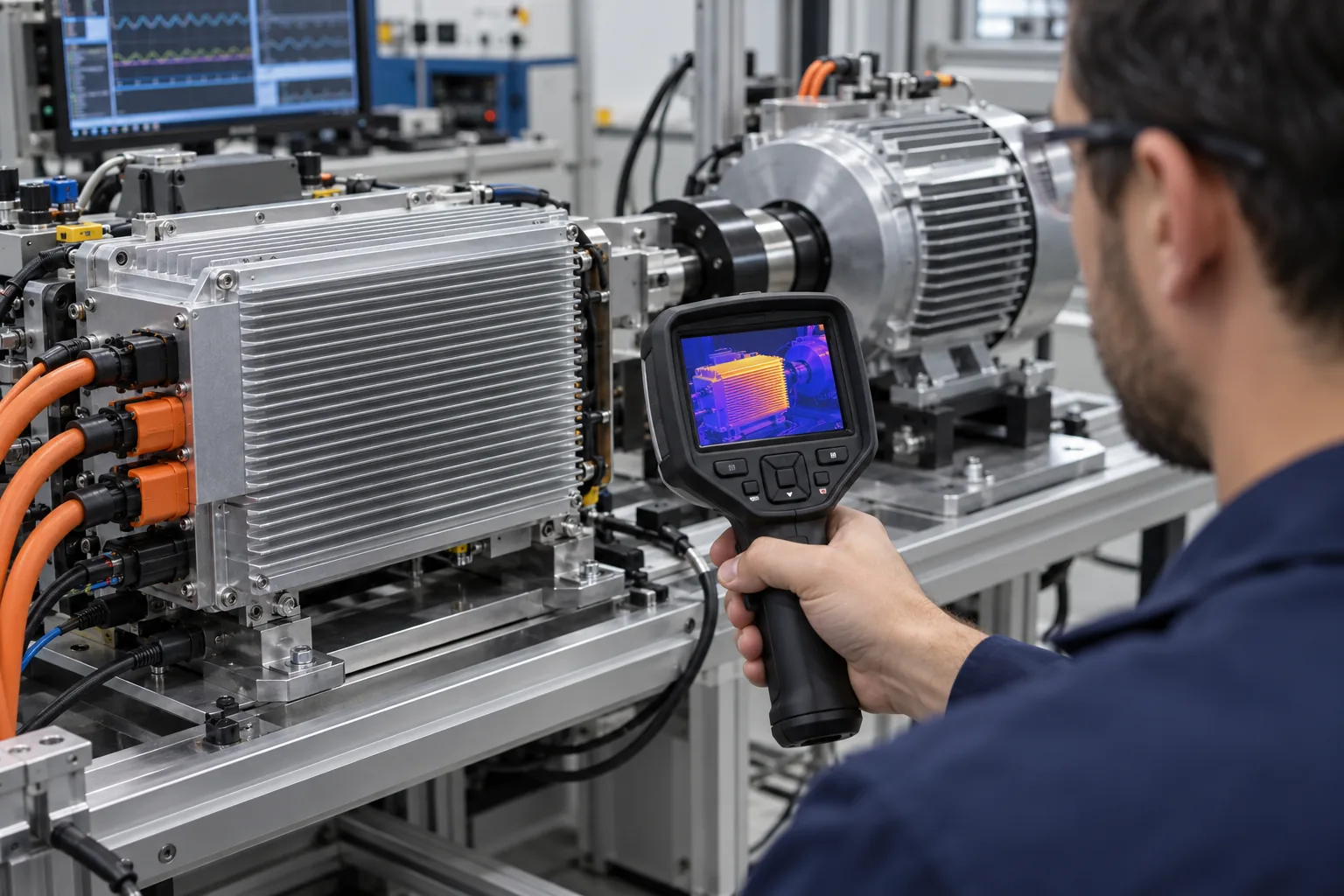
Control & Logic Behavior
The controller can be checked against the operating commands and logic required by the equipment.
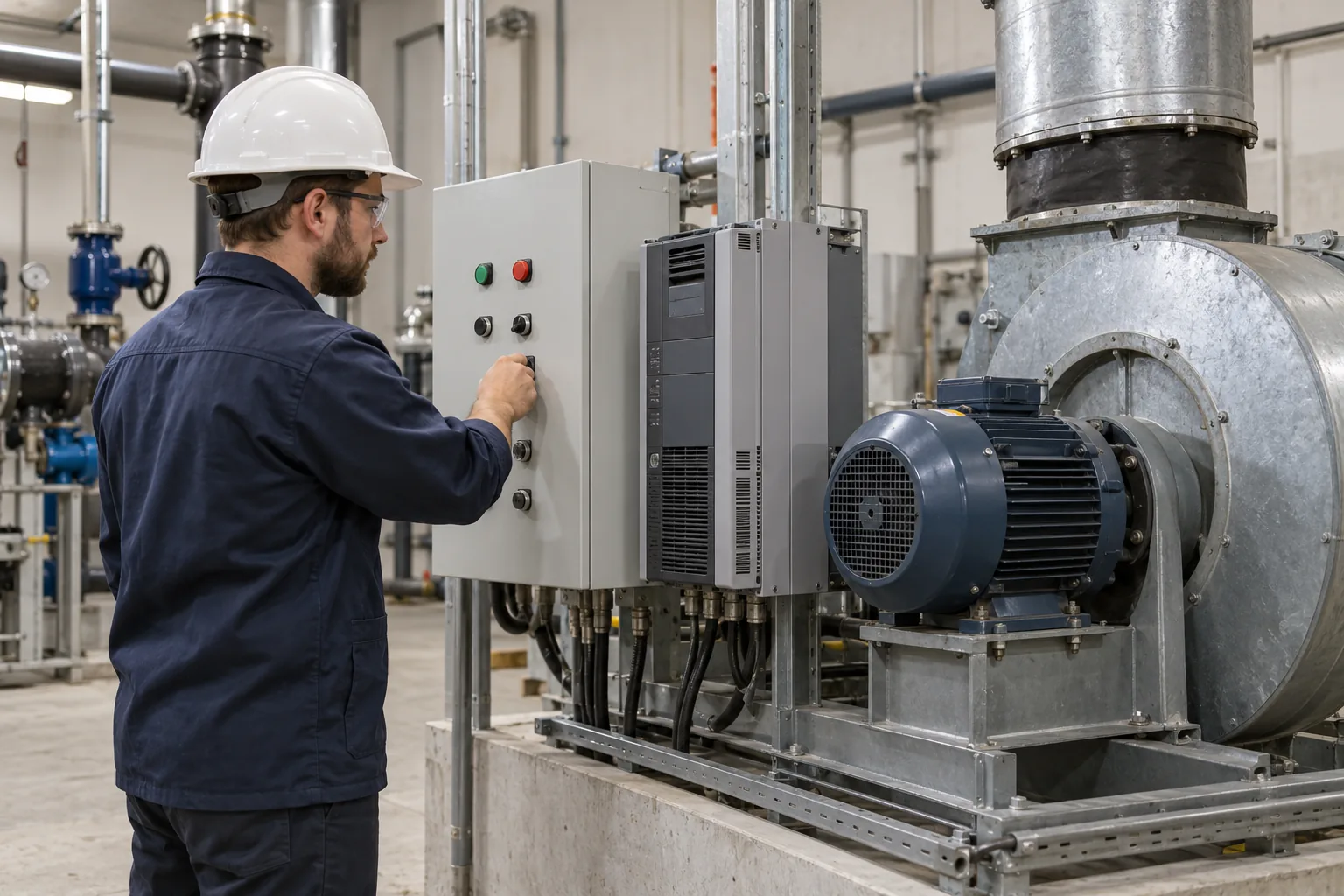
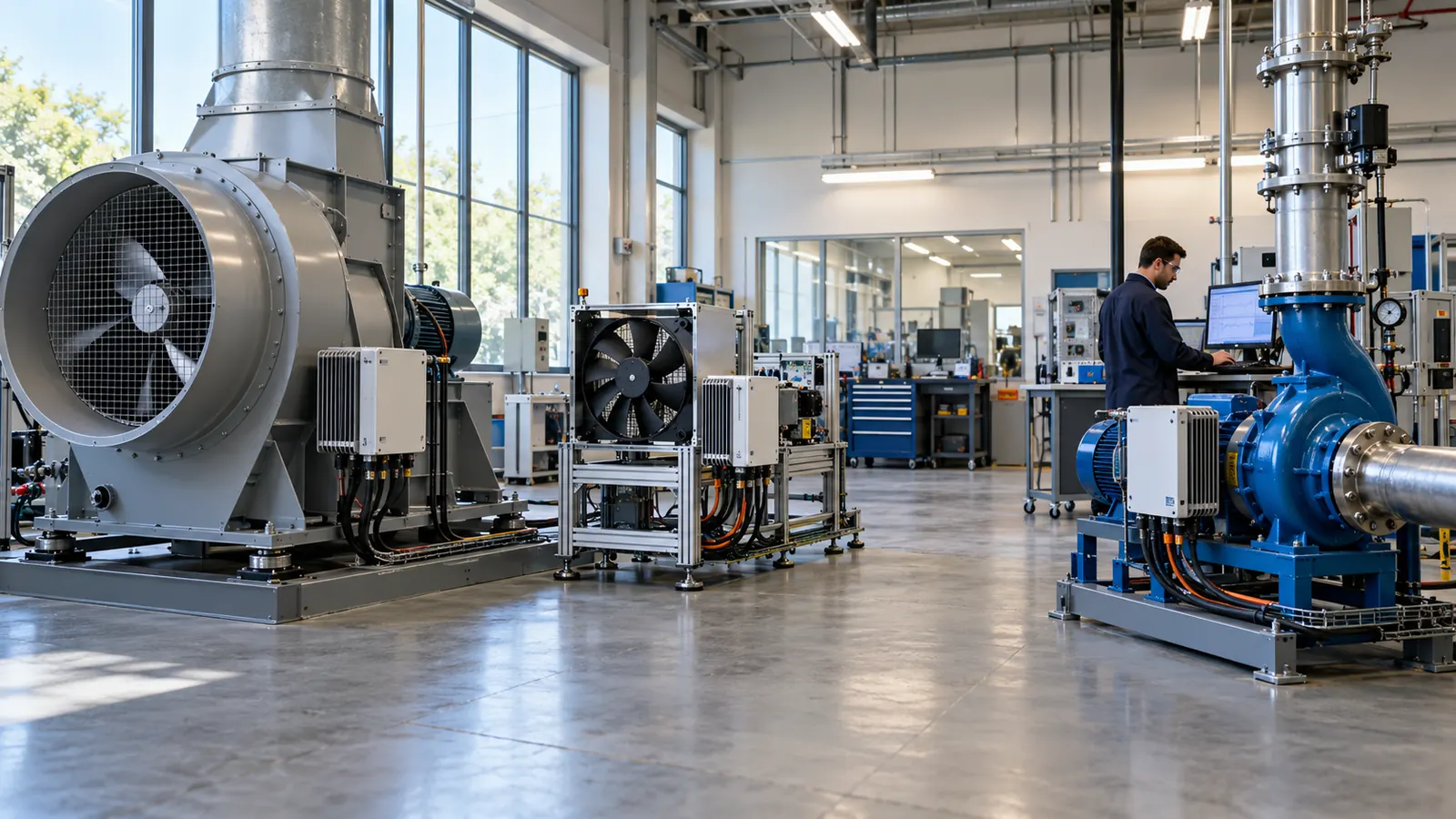
Application-Specific Validation
Different Loads Require Different Test Priorities
A ventilation fan, cooling fan and water pump may use BLDC motors, but they should not be tested in exactly the same way. Select an application to carry it into the testing inquiry.
Ventilation Equipment
0.18–5.5 kWAxial fans, negative pressure fans, centrifugal fans, blowers and industrial ventilation systems.
Cooling Fans
15–220 WEnergy storage equipment, UPS systems, power electronics, data center equipment, communication systems and industrial electronics.
Water Pumps
20–1,000 WIndustrial cooling, water circulation, irrigation, drainage, aquaculture and landscape systems.
Testing Process
From Technical Requirements to Confirmed Performance
VIREOMOTOR follows a structured engineering process when evaluating controller performance.
Define whether the project needs to verify startup, speed, load response, thermal behavior, control logic, application integration or another confirmed requirement.
Validation to Production
Confirmed Performance Must Be Repeatable
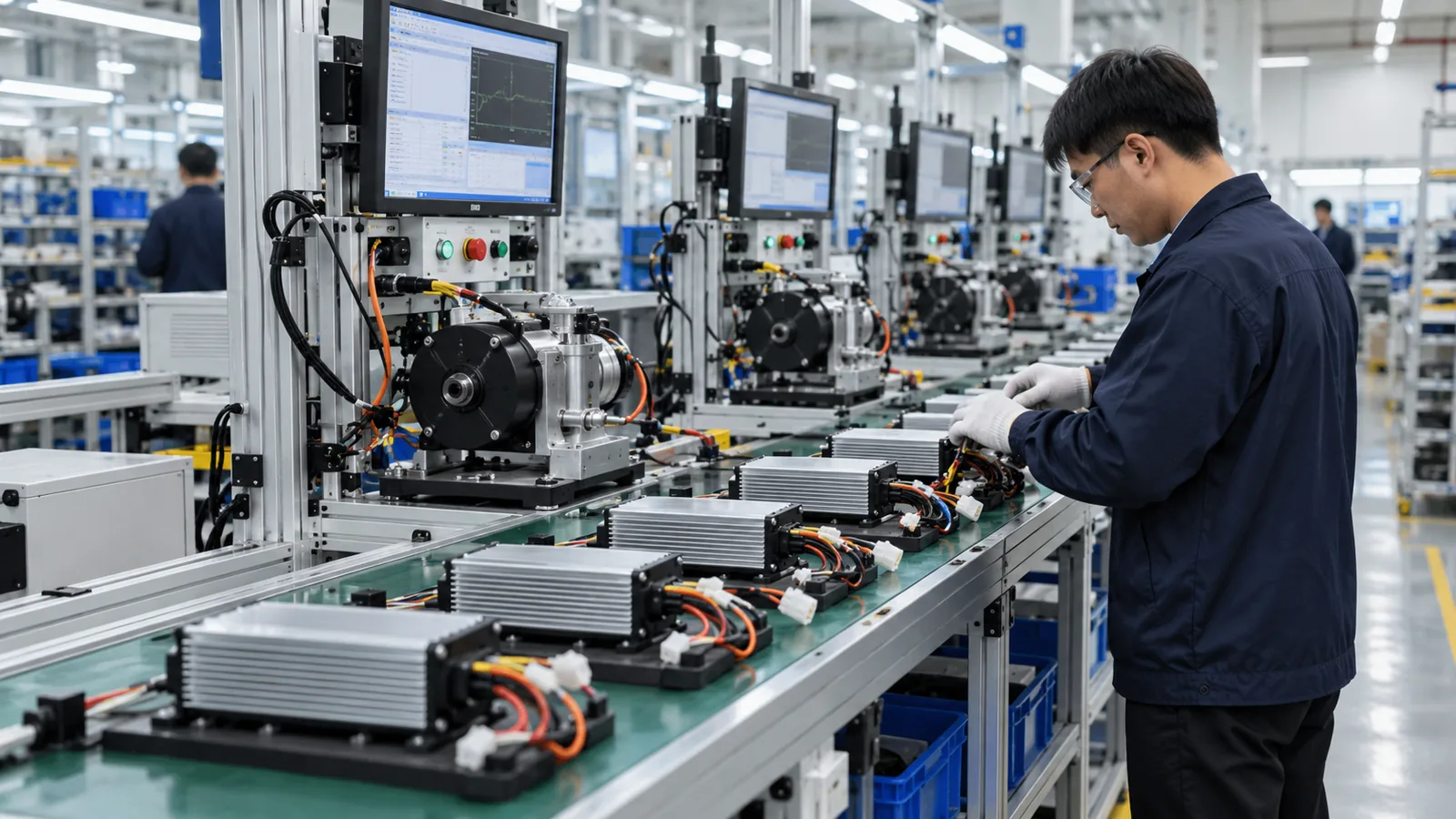
Engineering validation is useful only if the confirmed controller configuration can be transferred into production. VIREOMOTOR connects performance testing with standardized manufacturing and quality-control processes.
Configuration Confirmation
The validated hardware, software and parameter configuration can be documented for production.
Functional Testing
Production controllers can be checked against the intended operating functions.
Electrical Verification
Electrical characteristics can be evaluated according to the confirmed project specification.
Software & Parameter Control
Where applicable, required software and motor-control parameters can be incorporated into production requirements.
Quality Inspection
Defined inspection procedures support manufacturing consistency.
Engineering Feedback
If a technical issue is identified during production or sample evaluation, the engineering team can support further analysis.
Engineer-to-Engineer Support
Tell Us What Performance You Need to Verify
VIREOMOTOR specializes in the research, development and manufacturing of three-phase BLDC motor drive controllers, supporting controller development, motor tuning, validation and production implementation.
Motor Information
Motor type, rated voltage, power, current, speed, torque requirements and motor datasheet.
Controller Information
Controller model, hardware version, software version and existing parameter configuration.
Application Information
Fan / blower / pump / other supported equipment, load characteristics, duty cycle and operating environment.
Performance Requirements
Startup, speed stability, load response, thermal performance, noise-related behavior, control logic, long-duration operation or application integration.